The set, in context
Neo Genesis launched on December 16, 2000, two months after Gym Challenge closed the Wizards Base format. The expansion opened the Neo Series and brought Generation 2 Pokémon to cardboard for the first time in English. Pokémon Gold and Silver had shipped to North America in October 2000; the TCG followed two months later, the first time the cards aligned with a contemporaneous game release rather than trailing 27 months behind Japan.
Two structural innovations defined the era: Darkness and Metal as new Energy types (colour-coded badges that complicated deckbuilding), and the foundation of what would become the Shining Pokémon mechanic in Neo Revelation. Neo Genesis itself featured 14 holographic rares, the most consequential of which is Lugia 9/111 — the cover icon, the most iconic holographic illustration of the entire vintage era, and one of the most celebrated Generation 2 Pokémon designs in any medium.
Two print runs: 1st Edition and Unlimited. PSA 10 1st Edition Lugia is a six-figure card — auction sales have cleared $30,000+ multiple times since 2021. Neo Genesis sits inside the broader Neo Series as the first of four mainline expansions before Legendary Collection closed the era with the first reverse holos in TCG history.
Rarity breakdown
The three print runs
Reading the variant on a Base Set card takes thirty seconds and is the foundational skill of vintage Pokémon collecting. The price gap between print runs is roughly an order of magnitude per tier.
1st Edition
"Edition 1" stamp printed under the bottom-left corner of the artwork frame.
The first commercial print of Neo Genesis. PSA 10 1st Edition Neo Genesis holos sit at the top of the Neo Series price hierarchy, with Lugia as the unambiguous flagship.
Unlimited
No "Edition 1" stamp. Standard drop-shadow artwork frame.
Mass-market reprint that ran from early 2001 through 2002. Larger print run; the more common version in the secondary market.
The chase cards
The cards that drive collector demand and define the secondary market for Neo Genesis. PSA 10 examples of these are mid-five-figure to six-figure assets in their 1st Edition print runs.
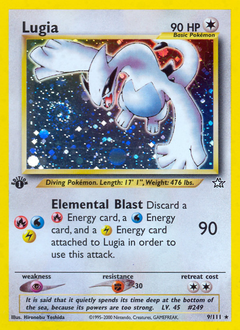
Lugia
The cover icon of Neo Genesis and one of the most celebrated holographic illustrations in the entire TCG. PSA 10 1st Edition Lugia trades in the high five to low six figures as of 2026; auction sales have cleared $30,000+ multiple times since 2021. The unambiguous flagship of the Neo era.
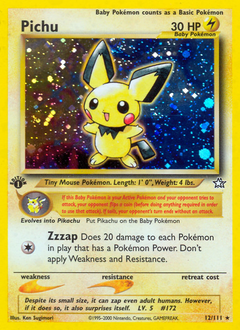
Pichu
Pikachu's baby pre-evolution, first introduced in Generation 2. Strong character-driven collector demand alongside Pikachu and Raichu lineage cards.
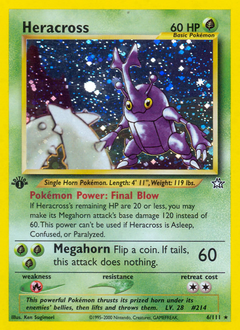
Heracross
Bug/Fighting-type Generation 2 Pokémon with strong design appeal. Surprising mid-five-figure PSA 10 1st Edition prices reflecting collector demand for non-Lugia Neo holos.
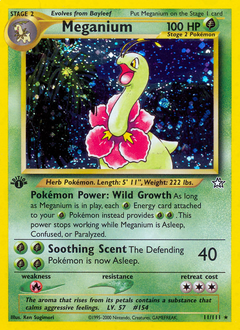
Meganium
Generation 2 Grass starter final evolution. Co-flagship with Feraligatr and Typhlosion as the Gen 2 starter trio.
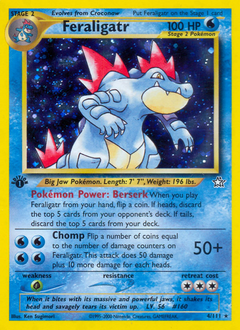
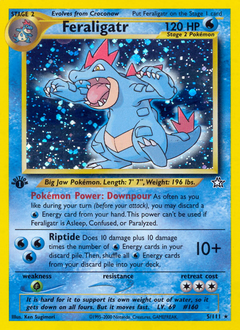
Feraligatr
Generation 2 Water starter final evolution. Strong demand from collectors building Gen 2 starter trio collections.
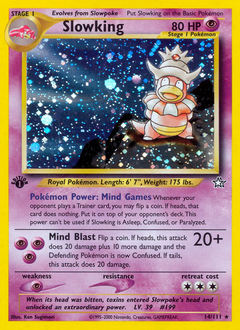
Steelix
Onix's Generation 2 evolution. First mainstream Steel-type Pokémon in the TCG holographic format.
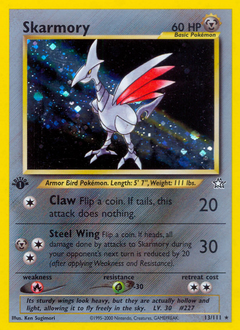
Skarmory
Steel/Flying Generation 2 Pokémon. Lower-profile holo with stable but not headline-grabbing market.
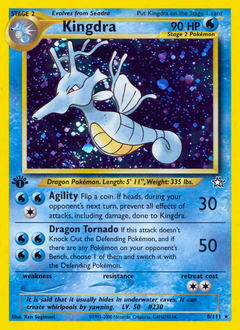
Kingdra
Seadra's Generation 2 evolution. Cross-set demand from Misty's Seadra (Gym Heroes) collectors building the full Seadra-line collection.
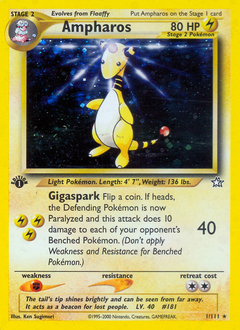
Ampharos
The first card by number in Neo Genesis. Generation 2 Electric-type with a polarising design that has aged well; steady mid-tier demand.
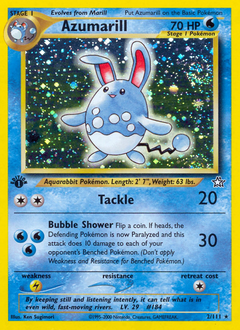
Azumarill
Marill's Generation 2 evolution. Among the more accessible PSA 10 starting points for a Neo Genesis holo collection.
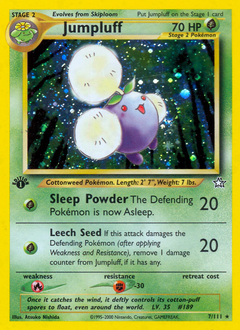
Jumpluff
Hoppip's Generation 2 evolution chain capstone. Lower demand within the Neo Genesis hierarchy but stable collector base.
Forretress
Generation 2 Bug/Steel-type Pokémon. Mid-tier holo with consistent collector demand.
Where the market sits in 2026
Karpfolio's aggregated sales data through mid-2026 shows Neo Genesis 1st Edition holographic rares anchored by Lugia 9/111, which sits in the high-five to low-six figure PSA 10 range. The remaining Neo Genesis holos trade at materially lower levels — typically mid-four to low-five figures for PSA 10 1st Edition examples.
PSA population data through 2026 shows Neo Genesis 1st Edition with similar graded population to Team Rocket 1st Edition. The smaller print run of Neo Genesis (relative to Base Series sets) combined with Generation 2 nostalgia has supported consistent appreciation since 2021. Lugia in particular has roughly doubled in PSA 10 since 2022.
Unlimited Neo Genesis is the more accessible WotC vintage segment for new graded vintage collectors targeting Generation 2 exposure. PSA 10 Unlimited Lugia trades in the mid-four figures, while other Unlimited Neo Genesis holos start in the low four figures.
Tracking Neo Genesis on Karpfolio
Karpfolio tracks Neo Genesis with full variant awareness. 1st Edition and Unlimited prints have separate sales histories and per-PSA-grade Guide Prices. Lugia 9/111 gets the per-grade treatment serious collectors require — PSA 10, PSA 9, PSA 8 are tracked as independent assets, each with its own market valuation distinct from the Unlimited print.