The set, in context
Aquapolis launched on January 15, 2003, four months after Expedition opened the e-Card Series. The expansion is the largest WotC mainline set by card count (186 cards) and introduced two structural elements that defined the e-Card era: the H-numbered chase set (H1-H32) and Crystal Type Pokémon.
The H-numbered subset is a parallel chase set within the main expansion: 32 holographic rares with their own number range (H1-H32), distinct from the standard 1-147 numbering. Pull rates were lower than standard Holo Rares. The H-numbered concept continued in Skyridge, which featured its own H1-H32 chase set with Crystal Charizard as the flagship.
Crystal Type cards feature a transparent crystalline overlay across the central artwork — a unique foil treatment that introduced new visual language to the TCG. Crystal Lugia H30 is the chase card of Aquapolis: Generation 2's most iconic Pokémon (the Neo Genesis cover icon) reissued with the Crystal Type treatment. PSA 10 Crystal Lugia trades in the mid-five to low-six figures as of 2026.
Rarity breakdown
The three print runs
Reading the variant on a Base Set card takes thirty seconds and is the foundational skill of vintage Pokémon collecting. The price gap between print runs is roughly an order of magnitude per tier.
Unlimited
No edition stamp. Dot-code strip along the bottom edge of every card.
The only print run of Aquapolis. Print run was meaningfully smaller than Expedition due to declining contemporary demand.
H-numbered Chase (H1-H32)
Card number prefixed with "H" (e.g. H4, H30). Always holographic.
Parallel chase set within Aquapolis with lower pull rates than standard Holo Rares. The H-numbered subset is the primary collector focus of the set.
Crystal Type
Transparent crystalline overlay across the central artwork. Numbered with H prefix or above main set count.
Crystal Type Pokémon introduced in Aquapolis. Crystal Lugia H30, Crystal Ho-Oh H29, Crystal Nidoking H17 are the era's first Crystals; Skyridge added Crystal Charizard 146/144 and Crystal Celebi 149/144.
The chase cards
The cards that drive collector demand and define the secondary market for Aquapolis. PSA 10 examples of these are mid-five-figure to six-figure assets in their 1st Edition print runs.
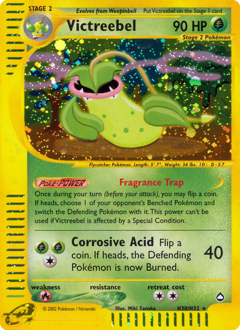
Crystal Lugia
The chase card of Aquapolis. Crystal Type Lugia with transparent crystalline overlay. PSA 10 Crystal Lugia trades in the mid-five to low-six figures as of 2026 — the most desirable Aquapolis card and a structural complement to Crystal Charizard from Skyridge.
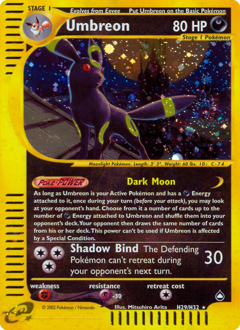
Crystal Ho-Oh
Crystal Type Ho-Oh from Aquapolis (note: a different Crystal Ho-Oh, H31, exists in Skyridge). PSA 10 trades in the mid-five figures.
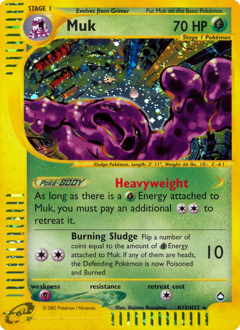
Crystal Nidoking
Crystal Type Nidoking. Less hyped than Crystal Lugia and Crystal Ho-Oh but materially scarcer in PSA 10. Strong cross-set Nidoking collector demand.
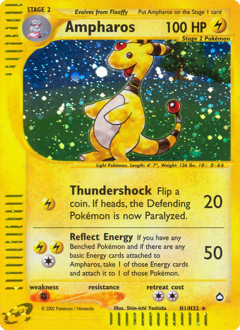
Aerodactyl
The first H-numbered card in Aquapolis. Cross-set Aerodactyl collectors target this alongside Fossil Aerodactyl.
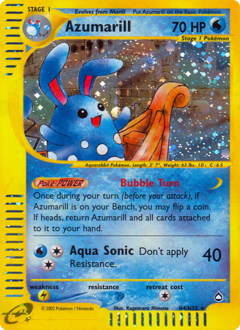
Blastoise
H-numbered Blastoise from Aquapolis. Cross-set Blastoise collectors target this as a distinct e-Card-era variant.
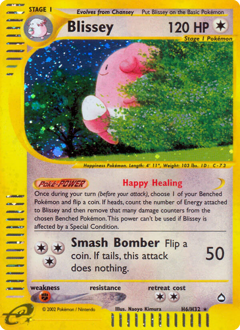
Charizard
H-numbered Charizard from Aquapolis. Distinct from Skyridge Charizard variants. PSA 10 trades in the low-five figure range.
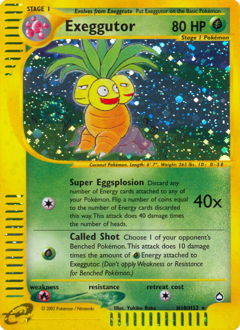
Espeon
H-numbered Espeon. Cross-set Eeveelution collectors target this alongside Neo Discovery Espeon and Skyridge variants.
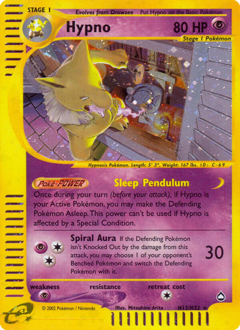
Gyarados
Karpfolio-relevant for obvious reasons. H-numbered Gyarados from Aquapolis. PSA 10 demand remains strong from collectors targeting iconic creatures across vintage eras.
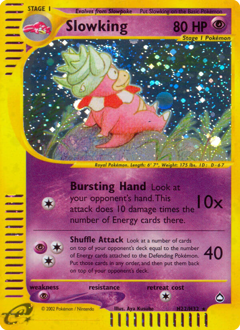
Pikachu
H-numbered Pikachu from Aquapolis. Strong character-driven collector demand for the Pikachu lineage.
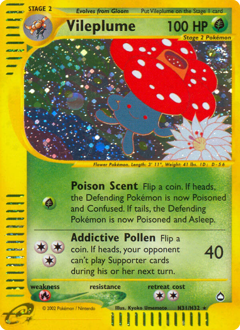
Tyranitar
H-numbered Tyranitar from Aquapolis. Cross-set Tyranitar collectors target this alongside Neo Discovery and Neo Destiny Shining variants.
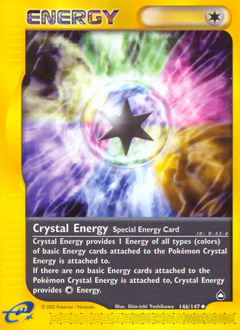
Pichu (Crystal-tier secret)
Numbered above the official set count as a secret rare. Generation 2 baby Pikachu pre-evolution in secret-rare status.
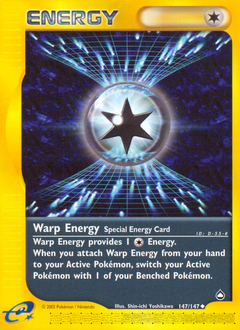
Celebi (secret rare)
Numbered above the official set count. Generation 2 Mythical Pokémon in secret-rare status; precursor to the Crystal Celebi 149/144 in Skyridge.
Where the market sits in 2026
According to Karpfolio's PSA-grade tracking through mid-2026, Aquapolis is the second-most-valuable e-Card era set after Skyridge. The H-numbered chase set (H1-H32) trades at premium levels relative to standard Holo Rares, with PSA 10 H-numbered cards typically clearing low-to-mid four figures depending on character popularity. Crystal Lugia H30 is the apex card.
Crystal Type Pokémon are the structural anchor of Aquapolis pricing. PSA 10 Crystal Lugia has cleared $50,000+ at auction multiple times since 2021 and continues trading in the mid-five to low-six-figure range as of 2026. Crystal Ho-Oh H29 and Crystal Nidoking H17 follow at slightly lower levels.
PSA population data through 2026 shows Aquapolis with materially smaller graded population than Expedition for equivalent-tier H-numbered cards. The set's shift to the H-numbered chase format created a focused collector target that has supported steady appreciation for high-grade H-numbered examples since 2022.
Tracking Aquapolis on Karpfolio
Karpfolio tracks Aquapolis with full variant awareness. H-numbered chase rares, Crystal Type Pokémon, secret rares, and main-set cards each get their own classification. The Crystal Type foil treatment is tracked as a distinct variant from standard Holo Rares, so a PSA 10 Crystal Lugia sales history is separate from a PSA 10 H-numbered standard Lugia.